
Environmental monitoring and compliance in Ireland, from first sample to annual report
Verdé measures what your site sends beyond its boundary, from dust and noise to water and discharges, checks it against your licence or planning conditions, and writes the reports the EPA, your council or Uisce Éireann expect. Offices in Kilcoole, Cork and Castlebar.
Last updated
Environmental monitoring is the regular measuring of what a site releases or affects, such as dust, noise, vibration, surface water, groundwater and discharges, against the limits in its licence, permit or planning permission. Compliance is showing that those limits and every other condition are met, through records, audits and reports. Verdé does both for EPA-licensed sites, construction projects and businesses with discharge licences, and prepares the Annual Environmental Report the EPA requires by 31 March.
Environmental monitoring here means measuring a site's effect on the air, water, ground and neighbours to meet licence, permit or planning conditions. Measuring what staff breathe at work is occupational hygiene; detailed noise, air and odour assessments for planning are air, noise, odour and vibration; applying for the licence itself is EPA and IPC licensing.
Key takeaways
- An EPA licensee's Annual Environmental Report is due by 31 March each year, or by 28 February for urban waste water licences.
- The EPA treats any emission that breaks a licence condition as an incident, to be reported as soon as practicable.
- The EPA's 2006 quarry guidelines recommend dust deposition of no more than 350 mg/m² a day, averaged over 30 days.
- Water results are read against licence limits and the national standards in the 2009 Surface Waters and 2010 Groundwater Regulations.
- Verdé has run monthly water quality sampling at 19 lakes in Clare and 6 in Wicklow for the Water Framework Directive programme.
Is this right for you?
This is a fit if
- Your EPA licence, waste permit or discharge licence sets monitoring and reporting you must keep up with.
- Planning conditions on a construction or operating site require dust, noise, vibration or water monitoring.
- Neighbours or a regulator have raised a complaint and you need measured evidence.
- You want an independent compliance audit before an EPA visit, an ISO 14001 audit or a sale.
This is not a fit if
- A spill or pollution incident is happening now: call the 24/7 line on 0818 714 002 or use emergency response.
- You need staff exposure measured at work: go to occupational hygiene.
- You need a new licence or permit: go to EPA and IPC licensing.
If it is not a fit, the links above go to the right team, and the 24/7 line answers any spill.
What does environmental monitoring include?
Measuring what a site sends beyond its boundary and comparing it with set limits. Verdé's monitoring covers dust and air quality, noise and vibration, surface water, groundwater and discharges to rivers or sewers, each measured at the point its licence or permission names and reported to the body that set the limit.
| Point | What it measures | Compared with |
|---|---|---|
| D1 to D4, site boundary | Dust deposition over about 30 days | 350 mg/m² a day (EPA, 2006), or your conditions |
| N1, nearest home | Noise as an hourly average, LAeq | 55 dB(A) by day and 45 dB(A) at night (EPA, 2006), or your conditions |
| SW1 and SW2, upstream and downstream | Surface water quality | Licence limits and the Surface Waters Regulations 2009 |
| E1, discharge point | What is discharged, and how much | The limits in the discharge or trade effluent licence |
| GW1 and GW2, wells either side of the site | Groundwater quality and level | Licence conditions and the Groundwater Regulations 2010 |
| A1, stack | Emissions to air | The emission limit values in the licence |
| What | Where it is measured | Compared with | Reported to |
|---|---|---|---|
| Dust deposition | Gauges on the site boundary, each left out for about 30 days | Your conditions; the EPA's quarry guideline is 350 mg/m² a day (EPA, 2006) | The EPA in the AER, or the planning authority |
| Noise | At the nearest noise-sensitive homes | Licence or planning limits; for licensed sites the EPA's NG4 guidance sets the survey method | The EPA or the planning authority |
| Vibration | At the nearest buildings while works run | Planning conditions | The planning authority and the contractor |
| Surface water | Upstream and downstream of the site or discharge | Discharge licence limits and the Surface Waters Regulations 2009 | The council, the EPA or Uisce Éireann |
| Groundwater | Monitoring wells up-gradient and down-gradient | Licence conditions and the Groundwater Regulations 2010 | The EPA in the AER |
| Discharges | The sampling point before a river, stream or sewer | The limits in a Section 4 discharge licence or a trade effluent licence | The council or Uisce Éireann |
| Air emissions | Stacks, vents and boilers | The emission limit values in the licence | The EPA in the AER |
What will your licence or planning permission make you monitor?
Whatever its conditions list, at the points and frequencies they set. The planner below takes what regulates your site and what happens on it, and lists the monitoring such sites usually carry and where the results go. Your own licence or permission is the final word, and Verdé reads it before quoting.
Monitoring planner
What regulates the site and what happens there. Nothing is stored or sent.
Choose what regulates the site, then tick what happens there, to see the monitoring it usually carries.
How the planner decides
| If | The planner adds | Why |
|---|---|---|
| An EPA industrial emissions, IPC or waste licence | Monitoring to the licence schedule, and the AER by 31 March | The licence sets what is monitored, and the EPA wants a yearly summary. |
| A council waste facility permit | Monitoring and reports as the permit sets | The local authority issues and enforces the permit. |
| Planning conditions on a construction or operating site | Monitoring as the conditions set, reported to the planning authority | Conditions can set limits for dust, noise, vibration or water. |
| A discharge or trade effluent licence | Sampling at the discharge point against its limits | Councils license discharges to waters; Uisce Éireann licenses trade effluent to sewer. |
| No licence or conditions yet | A baseline survey before work starts, or a compliance audit | A baseline shows what was there before you began. |
| Earthworks, crushing or stockpiles | Dust deposition gauges on the boundary | Dust can travel beyond the boundary in dry, windy weather. |
| Homes or schools near the site | Noise at the nearest homes, and vibration during works | Noise is measured where people live, not at the fence. |
| A discharge to a river, stream or drain | Water sampling upstream and downstream | It shows whether the discharge changes the watercourse. |
| Fuel, oil or chemical storage | Groundwater wells and bund checks | Leaks reach the ground first, and a licence can ask for bund integrity tests. |
| A stack, boiler, generator or odour source | Emissions or odour monitoring | Stacks are checked against licence limits; odour against conditions and complaints. |
How this works: common conditions on Irish sites. Your licence, permit or planning permission sets the real points and frequency; nothing is fixed until Verdé has read it.
When is the Annual Environmental Report due, and what goes in it?
By 31 March each year for EPA industrial and waste licensees, and by 28 February for urban waste water licences. The AER gives the public a short summary of the site's environmental performance in the previous year, including its monitoring results, and goes to the EPA through its EDEN portal.
What the EPA asks an AER to cover
- Environmental objectives and targets, and progress on them
- Power, water and resource efficiency
- Complaints and incidents during the year
- Summary results of emissions monitoring: air, water, sewer, noise, odour and dust
- Waste sent off site for recovery or disposal, and, for waste sites, waste accepted
- Confirmation of financial provision for incidents and, where it applies, for closure
Some licences also ask for extra reports with the AER, such as bund integrity tests, hydrogeological investigations, toxicity tests and firewater retention studies (EPA). Verdé prepares AERs, bund and pipe integrity tests and hydrogeological investigations, working from the records the site already keeps.
What happens when a result is over the limit?
It is treated as an incident and reported. The EPA counts any emission that does not comply with a licence as an incident, to be reported as soon as practicable by phone and then in writing through the EDEN portal, with Uisce Éireann, the council or the fisheries body told where they are affected.
The six steps after an exceedance
Stop or contain the source:
Act first on whatever is causing the exceedance, so its effect does not grow.
Notify the EPA:
As soon as practicable: by phone, then in writing on the incident notification form through the EDEN portal.
Tell the other bodies:
Where they are affected: Uisce Éireann, the local authority or Inland Fisheries Ireland.
Find the cause:
Check the sample, the method and the plant or activity behind the result, and re-sample if needed.
Fix it and record it:
Put the corrective action in place and keep the record; it appears in the year's AER under incidents.
Show it is fixed:
Follow-up monitoring confirms the result is back within the limit.
The EPA takes incident calls on 053 916 0600, or on 0818 33 55 99 out of hours (EPA). For a spill on your site, Verdé's 24/7 response line is 0818 714 002.
How does an environmental compliance audit work?
An audit checks every obligation, not just the monitoring results. Verdé lists what applies to the site, from licence conditions to waste and water rules, checks the records and the site against each one, grades what it finds by risk, and agrees a corrective action plan with owners and dates before the next EPA or ISO 14001 visit.
What the audit reads
- Licence, permit and planning conditions
- Monitoring records and laboratory certificates
- Waste dockets and transfer records
- Incident and complaint logs
What it checks on site
- Bunds, drains and interceptors
- Fuel, oil and chemical storage
- Monitoring points and equipment
- Housekeeping in waste areas
What you receive
- Each obligation marked met or not met
- Findings graded by risk
- A corrective action plan with owners and dates
- A follow-up check that actions are closed
Audited the same way ourselves
Verdé holds ISO 9001, ISO 14001 and ISO 45001 certification from QAS International, so its own quality, environmental and safety systems are audited every year in the way it audits a client site.

What monitoring has Verdé delivered?
Water, air, noise and vibration on live sites. Verdé ran monthly sampling at 19 lakes in Clare and 6 in Wicklow for the Water Framework Directive programme, real-time noise and vibration monitoring on construction sites, and continuous particulate monitoring with a telemetry link beside a biomass plant in Derry.
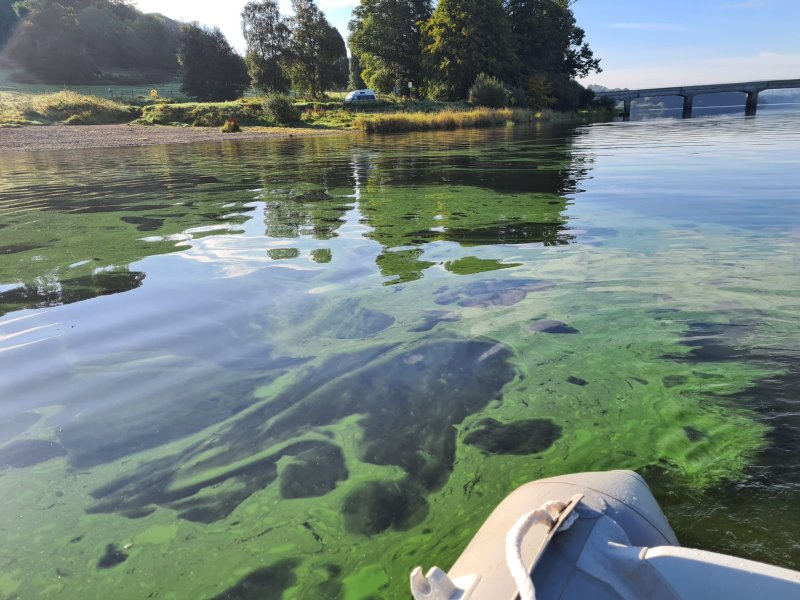
Lake water quality monitoring
2023, Counties Clare and Wicklow
- Monthly sampling at 19 lakes in Clare and 6 in Wicklow, for the Water Framework Directive
- Samples to EPA and county council laboratories, with temperature and dissolved oxygen profiles taken on the water
- Boats and kit cleaned between lakes so invasive species are not carried
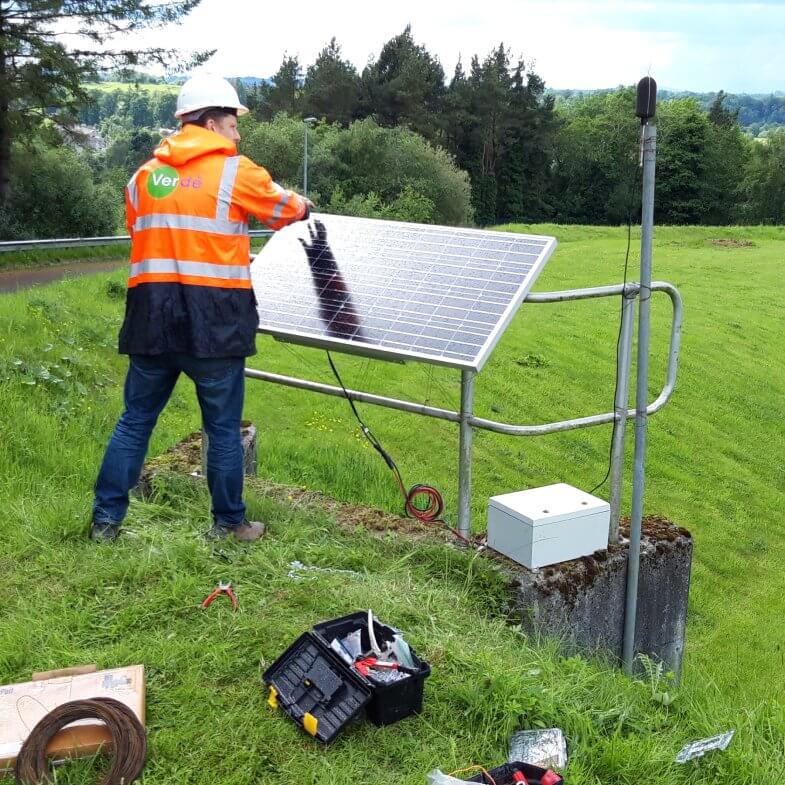
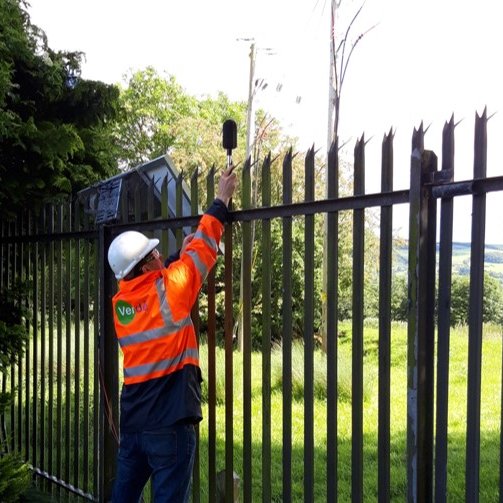
Monitoring on construction sites nationwide
2023, Ireland
- Real-time noise and vibration monitoring at site boundaries and neighbouring homes
- Surface water sampling, waste management and site audits
- Sites included the Ballymore Eustace water treatment plant and motorway service areas at Athlone and Kilcullen
Air quality beside a biomass plant
2017, Derry
- PM10, PM5 and PM1 measured continuously, with a telemetry link for viewing off site
- Bergerhoff dust gauges round the boundary and fortnightly combustion gas sampling
- Results set against a 2014 survey made before the plant was built
Who does environmental compliance work in Cork?
Verdé's Cork office at Airport East Business & Technology Park, Farmer's Cross, is home to consultancy and field teams, alongside the Kilcoole head office and laboratory in Co. Wicklow and the Castlebar office in Co. Mayo. Sites anywhere in Ireland get the same methods, the same report format and the same 24/7 line.
Cork
Unit 3, Airport East Business & Technology Park, Farmer's Cross, Co. Cork, T12 T854
Kilcoole, head office and laboratory
E7 Network Enterprise Park, Kilcoole, Co. Wicklow, A63 KV04
Castlebar
Units 3 & 4 Strathmore Place, Moneen Industrial Estate, Castlebar, Co. Mayo, F23 YV61
Galway clients are seen by appointment, and the 24/7 line, 0818 714 002, covers spills and pollution incidents anywhere in the country. For a county view of Verdé’s field work, see remediation services by county.
Monitoring and compliance terms in plain English
Eight terms come up in every licence, monitoring report and audit. Knowing them makes a set of conditions or a laboratory report quicker to read, and makes it easier to see which results need action and which are routine.
- Monitoring programme
- The list of what is measured, where, how often and against which limit, usually set by a licence or permission.
- Emission limit value
- The most a site may release of a substance, written into its licence.
- Noise-sensitive location
- A home, school, hospital or similar building where noise is measured and limits apply.
- Dust deposition
- The weight of dust settling on an area each day, measured in mg/m² a day.
- Bergerhoff gauge
- A jar on a stand that catches falling dust over about 30 days for weighing in a laboratory.
- Annual Environmental Report
- An EPA licensee's yearly summary of its environmental performance, due by 31 March.
- EDEN
- The EPA's online portal for licence returns, including AERs and incident notifications.
- Corrective action
- The fix agreed for a breach or audit finding, with an owner and a date.
Questions about environmental monitoring and compliance
Still have a question? Call 01 201 1260 or email info@verde.ie.
How often does a site need environmental monitoring?
As often as its licence, permit or planning conditions say, which can be anything from continuous to once a year, and the licence schedule or condition states it. Dust gauges are collected at the end of each period of about 30 days. Where nothing is set, a baseline before work starts and a check at each stage of the project are a sensible minimum.
Who checks environmental compliance in Ireland?
The EPA checks the sites it licenses, through inspections, Annual Environmental Reports and incident reports. Local authorities enforce planning conditions, waste facility permits and Section 4 discharge licences. Uisce Éireann licenses and checks trade effluent sent to its sewers. A Verdé audit shows how a site stands against all three before any of them visit.
Do construction sites need environmental monitoring?
Often, yes, when the planning conditions require it. Conditions can set limits for dust, noise and vibration at nearby homes and for water leaving the site, usually gathered in a construction environmental management plan. Verdé has run real-time noise and vibration monitoring and surface water sampling on construction sites across Ireland, including a water treatment plant and two motorway service areas.
Can monitoring results be seen in real time?
Yes, for noise, vibration and airborne particles. Verdé has run real-time noise and vibration monitoring at construction site boundaries, and continuous particle monitoring with a telemetry link for viewing off site. Dust deposition, surface water and groundwater still rely on samples analysed in a laboratory, so those results follow the end of each sampling period.
What is a Bergerhoff dust gauge?
A Bergerhoff gauge is a collecting jar on a stand that catches dust falling out of the air at a fixed point, usually on the site boundary. After about 30 days the jar goes to a laboratory, where the dust is weighed and reported as mg/m² a day. The EPA's 2006 quarry guidelines use 350 mg/m² a day as the guideline value.
What is the difference between environmental monitoring and an environmental audit?
Monitoring measures; an audit checks. Monitoring records what a site emits or affects, such as dust, noise and water quality, at set points and times. An audit looks at every obligation the site has, including monitoring, records, storage, waste and incidents, and says which are met and what to fix. Most licensed sites need both every year.
Who prepares the Annual Environmental Report?
The licensee is responsible for it, and many use a consultant to compile it. Verdé prepares AERs from the site's own monitoring records, waste data and incident logs, ready for the licensee to submit through the EPA's EDEN portal by 31 March, and can add the bund integrity tests or hydrogeological reports a licence asks for alongside it.
What does Verdé need to start?
Four things: the site address and what happens there, a copy of the licence, permit or planning conditions, any past monitoring results or reports, and what has prompted the work, such as a new condition, a complaint or an EPA visit. With those, Verdé proposes the monitoring points and frequency and replies within one working day.
Sources and further reading
- Annual Environmental Report (AER)Environmental Protection Agency, checked 24 November 2026. The 31 March and 28 February deadlines, EDEN, and what an AER covers.
- Incidents: reporting by EPA licenseesEnvironmental Protection Agency, checked 24 November 2026. What counts as an incident and how to notify the EPA.
- Environmental Management in the Extractive Industry (Non-Scheduled Minerals)Environmental Protection Agency, 2006. Guideline values for dust deposition and noise at quarries.
- Guidance Note for Noise: Licence Applications, Surveys and Assessments (NG4)Environmental Protection Agency, 2016. How noise is surveyed and assessed at EPA-licensed sites.
- European Communities Environmental Objectives (Surface Waters) Regulations 2009, S.I. 272 of 2009Irish Statute Book, 2009. The national standards surface water results are read against.
- European Communities Environmental Objectives (Groundwater) Regulations 2010, S.I. 9 of 2010Irish Statute Book, 2010. Groundwater threshold values and monitoring.
- About trade effluentUisce Éireann, checked 24 November 2026. Who needs a trade effluent licence to discharge to sewer.
- Discharge licencesDublin City Council, checked 24 November 2026. Section 4 licences for discharges to waters.
What happens when you send the site details
What we ask for
- Site address and what happens there
- The licence, permit or planning conditions
- Any past monitoring results or reports
- What prompted this: a new condition, a complaint or a visit
Reply
Within one working day, with the monitoring points and frequency we would propose.
If a spill or pollution incident is happening now, call the 24/7 line instead.
Phone 01 201 1260 or email info@verde.ie
Verdé guides on licences and compliance
Related Verdé services
- Noise, air, odour and vibration assessments in IrelandSurveys and models for planning.
- Occupational hygiene and workplace exposure monitoringWhat staff breathe and hear at work.
- Hydrogeology in Ireland: abstraction, models, protection, monitoringGroundwater wells and models.
- Which EPA licence does your site need, and how do you get it?Licences, permits and AERs.
- Construction dewatering in Ireland: dry digs, licensed dischargeDischarge licences on site.
- Environmental consultancy in Ireland, from first survey to sign-offEvery Verdé service by project stage.