
Sector
Pharmaceutical environmental support through the whole licence lifecycle
The production of pharmaceutical products, including intermediates, is class 5.16 of the EPA Act’s First Schedule, so it needs an EPA industrial emissions licence.
Last updated by Verdé Environmental Group
Key takeaways
- Pharmaceutical production is class 5.16 of the First Schedule and needs an EPA licence.
- Every EPA licensee’s Annual Environmental Report is due by 31 March.
- We model air dispersion with AERMOD and ADMS to the EPA’s AG4 guidance.
- From 2020 we provided environmental consultancy at Roche Clarecastle as the plant moved toward brownfield.
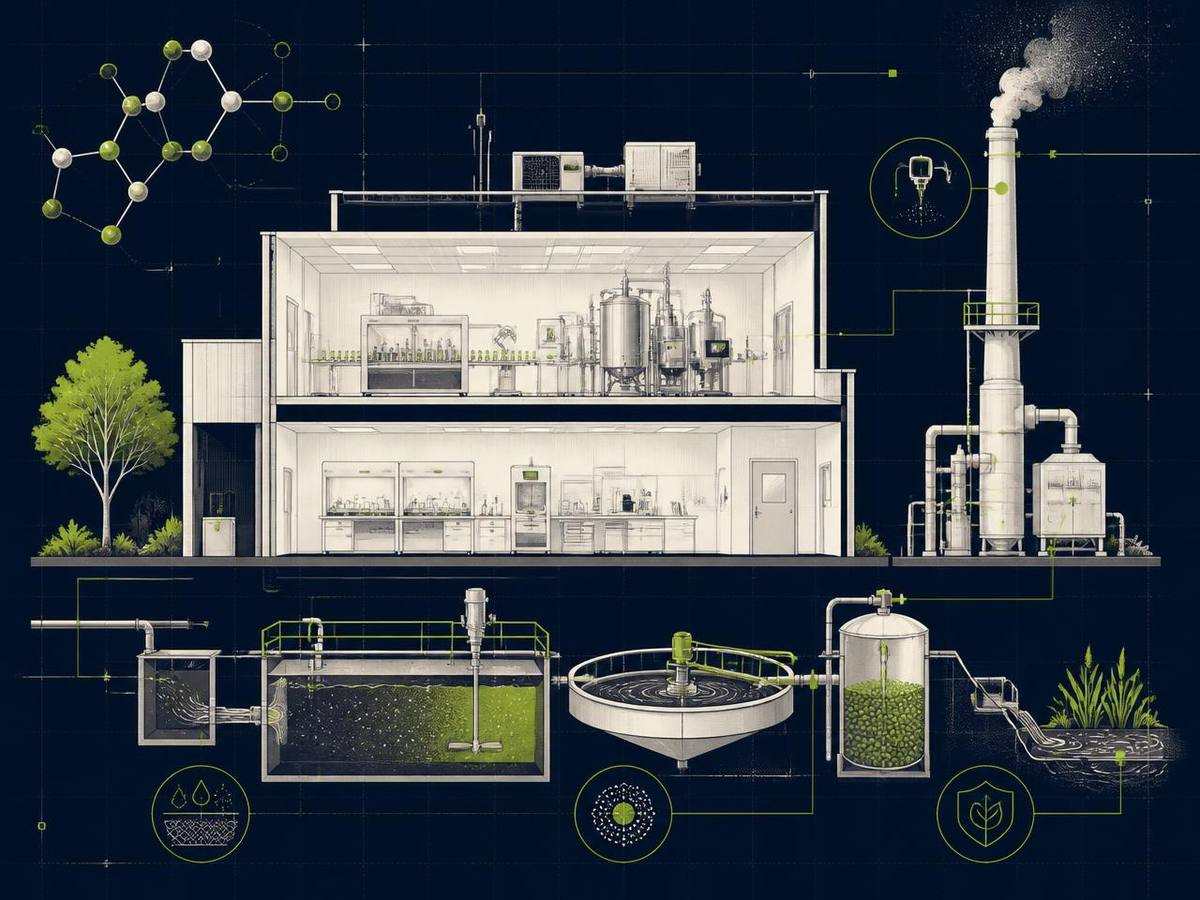
What environmental support does a pharmaceutical site need?
It depends where the site is in its life: applying for a licence, changing one, running to its conditions, being bought or sold, or closing down. Each stage asks for different evidence, and we cover all five, from the first application to the final validation report.
Verdé supports Ireland’s pharmaceutical manufacturers through the full regulatory lifecycle, from Industrial Emissions licensing and air dispersion modelling to groundwater monitoring, due diligence and closure planning.
Typical challenges we solve
- EPA Industrial Emissions (IE/IPPC) licence applications, reviews and technical amendments
- Air dispersion modelling for VOCs, solvents and process emissions
- Groundwater monitoring and Annual Environmental Reports
- Environmental due diligence for site acquisitions and expansions
This page is for pharmaceutical, biopharma and life sciences manufacturers in Ireland, licensed or about to be. It covers environmental licensing and compliance, not GMP, product quality or medicines regulation.
Is this right for you?
This is a fit if
- You are applying for, reviewing or changing an EPA industrial emissions licence.
- You need air dispersion modelling for solvents, VOCs or process emissions.
- You need groundwater monitoring or an Annual Environmental Report prepared.
- You are buying, expanding or closing a pharmaceutical site.
This is not a fit if
- You need GMP, product quality or medicines regulatory advice.
- You need process engineering or plant design.
For GMP and medicines regulation, start with the Health Products Regulatory Authority. For the environmental side of any change, we can help.
Does a pharmaceutical plant in Ireland need an EPA licence?
Yes. The production of pharmaceutical products, including intermediates, is class 5.16 of the First Schedule to the EPA Act, the list of activities that need an EPA licence. The EPA makes every licensing decision; we prepare the application, the BAT assessment and the environmental information behind it.
Class 5.16 sits in the industrial emissions part of the First Schedule. Once a licence issues, its conditions set what the site monitors and reports, and the EPA expects each licensee’s Annual Environmental Report by 31 March every year.
We prepare industrial emissions and IPC licence applications, reviews and technical amendments, and the Annual Environmental Report once the licence is running (EPA and IPC licensing).
What environmental work does a pharmaceutical site need at each stage?
A new site needs a licence application; a changing site needs a review or technical amendment; a running site needs monitoring and its annual report; a site changing hands needs due diligence; and a closing site needs decommissioning, remediation and validation. Choose your stage below to see what it usually involves.
Lifecycle stage guide
Choose where your site is and see what the work usually involves. Nothing is stored or sent.
Choose a stage to see what the work usually involves.
How the stage guide decides
| If you choose | What it usually means | Next step |
|---|---|---|
| Applying for a licence | The production of pharmaceutical products, including intermediates, is class 5.16 of the First Schedule, so it needs an EPA licence. We prepare the application and the environmental information behind it, including the BAT assessment. The EPA makes the decision and sets the licence conditions. | Send us the site plan and a description of the activity. |
| Licence review or change | We check your current monitoring and documentation against the licence. We prepare the information the EPA asks for, including technical amendments. The EPA makes every licensing decision. | Send us the licence number and what is changing on site. |
| Running the site | The Annual Environmental Report is due by 31 March each year. It gives a concise summary of the year’s environmental performance, including emissions monitoring results. We install groundwater wells, sample them and report the results. | Send us the licence number and your latest monitoring results. |
| Buying, selling or expanding | We review the site history and its licence record. Where needed, we investigate soil and groundwater so the condition of the site is known before anyone commits. | Send us the site address and the deal timetable. |
| Closing the site | At Clarecastle the plant went through decommissioning, decontamination, strip-out and demolition before remediation began. Remediation started in March 2023, after the EPA granted an IE licence. In 2023 our environmental management team was on site full time to keep the work within that licence. | Send us the site address and the licence number. |
Each stage lists the work it usually involves. Licence classes come from the First Schedule; the 31 March deadline from the EPA.
What is air dispersion modelling, and when is it needed?
A computer model that predicts how emissions spread from a site, used to show that air quality limits will be met. Pharmaceutical sites need it for solvents, VOCs and process emissions, to support a licence application, a technical amendment or a change to the plant.
We build the models with AERMOD and ADMS, following the EPA’s AG4 guidance, and assess odour around licensed sites to the EPA’s AG5 method. The results show the predicted concentration at the nearest homes and the site boundary.
Noise surveys and monitoring for licence conditions are covered on our air, noise and acoustics page.
Who licenses process effluent and groundwater on a pharmaceutical site?
Trade effluent to the public sewer needs a licence from Uisce Éireann, granted under Section 16 of the Local Government (Water Pollution) Acts, or a licence from the EPA. Discharging trade effluent without a licence is an offence. Groundwater on a licensed site is monitored as the licence sets out.
Uisce Éireann lists biopharma and chemical sites among the businesses that discharge trade effluent (Uisce Éireann). We prepare trade effluent licence applications, and our drilling and hydrogeology teams install wells, sample groundwater and report the results (water and hydrogeology).
What happens when a pharmaceutical plant closes?
The plant is decommissioned, decontaminated, stripped out and demolished, then the ground is remediated and the site returned to brownfield. At Roche Clarecastle, remediation began in March 2023 after the EPA granted an industrial emissions licence for the work.
| When | Stage | Source |
|---|---|---|
| 2020 | Five-year environmental consultancy contract begins | Verdé news, 2020 |
| Before March 2023 | Decommissioning, decontamination, strip-out and demolition | Verdé news, 2023 |
| March 2023 | Remediation begins after the EPA grants an IE licence | Verdé news, 2023 |
| 2023 | Enclosure built for controlled excavation of contaminated soil | Verdé news, 2023 |
| After remediation | The site returns to brownfield | Verdé news, 2023 |
Contaminated soil is dug out inside a specialised enclosure, which protects the people working there and keeps odours from reaching the community. The soil is loaded into sealed containers and sent to the Netherlands for thermal treatment. As we reported in December 2023, the site returns to brownfield once three areas of environmental concern are cleared.
2020
Environmental consultancy contract, Roche Clarecastle
Clarecastle, Co. Clare
- Five-year contract as the plant moved from manufacturing to a brownfield site
2023
Remediation phase begins, Roche Clarecastle
Clarecastle, Co. Clare
- A specialised enclosure for controlled excavation of contaminated soil
- Soil sent in sealed containers to the Netherlands for thermal treatment
- A dedicated environmental management team on site full time
What changes the job on a pharmaceutical site?
Four things: whether the site already holds an EPA licence, what is changing on site, where process effluent goes, and whether the site is being bought, sold or closed. Each one changes the evidence the EPA, Uisce Éireann or a buyer will ask for.
If this is true of your site
If the site produces pharmaceutical products or their intermediates
then the activity falls in class 5.16 of the First Schedule and needs an EPA licence.
If the site holds an EPA licence
then its Annual Environmental Report is due by 31 March each year.
If process effluent goes to the public sewer
then it needs a trade effluent licence from Uisce Éireann, or a licence from the EPA.
If a plant change alters emissions to air
then dispersion modelling to the EPA’s AG4 guidance shows whether air quality standards will still be met.
| Criterion | Verdé | What it means for you |
|---|---|---|
| Lifecycle | Licence application, review, compliance, due diligence and closure | One team from the first application to the last validation report. |
| Air | Dispersion modelling with AERMOD and ADMS | Models built to the EPA’s AG4 guidance. |
| On-site presence | A full-time environmental management team at Clarecastle during remediation | Compliance managed where the work happens. |
| Reporting | Annual Environmental Report preparation | The 31 March deadline is planned for, not chased. |
| Staffed offices | Kilcoole, Castlebar and Cork | Teams in the east, west and south. |
Pharmaceutical questions we are asked most
Still have a question? Call 01 201 1260 or email info@verde.ie.
Does a pharmaceutical plant in Ireland need an EPA licence?
Yes. The production of pharmaceutical products, including intermediates, is class 5.16 of the First Schedule to the EPA Act, and activities in that schedule need an EPA licence. The EPA decides each application and sets the conditions. Verdé reviews the activity, prepares the application and the BAT assessment, and runs the monitoring and reporting once the licence is in place.
What is air dispersion modelling?
It is a computer model that predicts how emissions spread from a site, used to show that air quality limits will be met at nearby homes and the site boundary. Verdé builds the models with AERMOD and ADMS, following the EPA’s AG4 guidance note, for licence applications, technical amendments and plant changes that alter emissions to air.
When is the Annual Environmental Report due?
The EPA’s deadline for the Annual Environmental Report is 31 March each year. The report gives the public a concise summary of the site’s environmental performance, including its objectives and targets and summary results from emissions monitoring. Check your licence for what yours must contain. Verdé prepares the report and runs the monitoring that feeds it.
Can Verdé help with an IE licence review or technical amendment?
Yes. We check your current monitoring and documentation against the licence and prepare the information the EPA asks for, including technical amendments when something changes on site. Where a change alters emissions to air, we model it to the EPA’s AG4 guidance. The EPA makes all licensing decisions; we make sure it has the evidence it needs.
What happens when a pharmaceutical plant closes?
The plant is decommissioned, decontaminated, stripped out and demolished, and contaminated ground is remediated before the site returns to brownfield. At Roche Clarecastle, remediation began in March 2023 after the EPA granted an industrial emissions licence, with contaminated soil dug out inside an enclosure and sent for thermal treatment. In 2023 Verdé had a dedicated environmental management team on site full time.
Does Verdé carry out groundwater monitoring on licensed sites?
Yes. Our drilling team installs groundwater monitoring wells, and our environmental team samples them, has the samples analysed and compares the results with the licence limits and the relevant assessment criteria. The results feed the Annual Environmental Report and show whether anything on site is reaching the groundwater, which matters for any later sale or closure.
Who licenses process effluent going to the sewer?
Uisce Éireann grants trade effluent licences under Section 16 of the Local Government (Water Pollution) Acts 1977 and 1990, and an EPA licence can cover the discharge instead. Uisce Éireann lists biopharma and chemical sites among the businesses that discharge trade effluent, and discharging it without a licence is an offence. Verdé prepares the application.
Terms used on this page
- Industrial emissions licence
- An industrial emissions licence is the EPA licence for the larger activities in the First Schedule, including pharmaceutical production.
- BAT
- BAT means best available techniques: the standard of technology and operation a licensed site is expected to meet.
- Annual Environmental Report
- The Annual Environmental Report is a licensee’s yearly summary of its environmental performance, due to the EPA by 31 March.
- Air dispersion modelling
- Air dispersion modelling predicts how emissions from a site spread, to test them against air quality standards.
- Trade effluent
- Trade effluent is any liquid waste discharged from a business premises to the public sewers.
- Brownfield
- A brownfield site is land that has been developed before, returned to a cleared state ready for reuse.
Sources and further reading
- First Schedule to the EPA Act 1992, as amendedEnvironmental Protection Agency, checked 3 November 2026. The activity classes and capacity thresholds that bring a site under an EPA licence.
- Annual Environmental Report (AER)Environmental Protection Agency, checked 3 November 2026. The 31 March deadline and what the report covers.
- About trade effluentUisce Éireann, checked 3 November 2026. Who needs a trade effluent licence to discharge to the public sewer.
- Air Dispersion Modelling Guidance Note (AG4)Environmental Protection Agency, 2020. How licensed sites model the spread of air emissions.
- Odour Impact Assessment Guidance for EPA Licensed Sites (AG5)Environmental Protection Agency, 2021 edition. The field method for assessing odour around licensed sites.
Tell us what your site needs
What we ask for
- The site address
- Your EPA licence number, if you hold one
- The requirement or deadline you are working to
- Recent monitoring results
- What is changing on site, if anything
Reply
Within one working day.
For a spill or pollution incident, phone 0818 714 002 at any hour. The duty engineer confirms the response on the call.
Office 01 201 1260 or info@verde.ie
Related pages
- EPA and IPC licensingWhich authorisation applies, and the application steps.
- Air, noise and acousticsDispersion modelling, odour and noise to EPA guidance.
- Hydrogeology and groundwaterWells, sampling and groundwater assessment.
- Contaminated landInvestigation, remediation and validation.
- Environmental consultancyDue diligence, audits and compliance.
- Food & DrinkLicensing and effluent for processors and distillers.