Environmental due diligence in Ireland: know the site before you sign
Phase I and Phase II site assessments for buyers, sellers, lenders and their solicitors, from the team whose director wrote the Law Society Gazette's 2017 guide to environmental due diligence.
Last updated
Environmental due diligence finds the environmental liabilities that come with a site or a business before you buy, sell, lend or lease. Verdé does it in two phases. Phase I researches the site's past and present uses and inspects it. Phase II, only where Phase I points to a problem, samples the soil and water to measure it. Each phase ends in a report that states the risk and what dealing with it would involve.
Environmental due diligence here means checking a site or business in Ireland for environmental liabilities before a transaction. It is not a building condition survey, a legal title search or ESG due diligence of a company's wider practices, which sits with sustainability and ESG. Cleaning up contamination already found is contaminated land remediation.
Key takeaways
- Phase I is a desk study of the site history plus a walkover inspection, ending in a preliminary risk assessment.
- Phase II is only needed when Phase I finds a likely problem; it adds boreholes or trial pits and laboratory tests.
- Irish law applies the polluter pays principle, and the EPA enforces the 2008 Environmental Liability Regulations.
- Due diligence also checks planning, permits and licences, plus asbestos and invasive plants such as Japanese knotweed.
- Verdé's Kevin Cleary wrote the Law Society Gazette's guide to environmental due diligence in 2017.
Is this right for you?
This is a fit if
- You are buying, selling or leasing land or a commercial building with a past industrial, fuel or waste use.
- You are lending on, insuring or investing in a site and need its environmental liabilities set out.
- You are a solicitor or agent whose client needs a Phase I or Phase II report before contracts.
- You are taking over a business that holds an EPA licence, a waste permit or a discharge licence.
This is not a fit if
- A spill or leak is happening now: call the 24/7 line on 0818 714 002 or use emergency response.
- You only need an asbestos survey of a building: go to asbestos survey and testing.
- Contamination is confirmed and needs cleaning up: go to contaminated land.
If it is not a fit, the links above go to the right team, and the 24/7 line answers any spill.
Why does environmental due diligence matter in an Irish deal?
Because contamination liability can outlast the owner who caused it. Irish rules apply the polluter pays principle, the EPA enforces the 2008 Environmental Liability Regulations, and a non-polluting owner or a lender can still be drawn into a clean-up. Due diligence puts a number on those risks before the price is fixed.
The European Communities (Environmental Liability) Regulations 2008, S.I. 547 of 2008, make operators liable for preventing and repairing environmental damage they cause, with the EPA as the competent authority since 1 April 2009 (EPA). They cover damage to water, land and protected habitats and species.
Writing in the Law Society Gazette in 2017, Verdé's Kevin Cleary noted that Irish regulation leans on the polluter pays principle rather than the owner liability common in the US, yet a lender or a non-polluting owner can still become liable for contamination (Law Society of Ireland, 2017). His advice to buyers: understand the site's condition before purchase and build clean-up costs into the price.
Liabilities a due diligence exercise looks for
- Soil or groundwater contamination from fuel, oil or chemical storage
- Waste buried or dumped on the land, legally or not
- Missing or breached planning conditions, permits and licences
- Asbestos in buildings that will be refurbished or demolished
- Invasive plants such as Japanese knotweed that need a licence to remove
What is the difference between a Phase I and a Phase II site assessment?
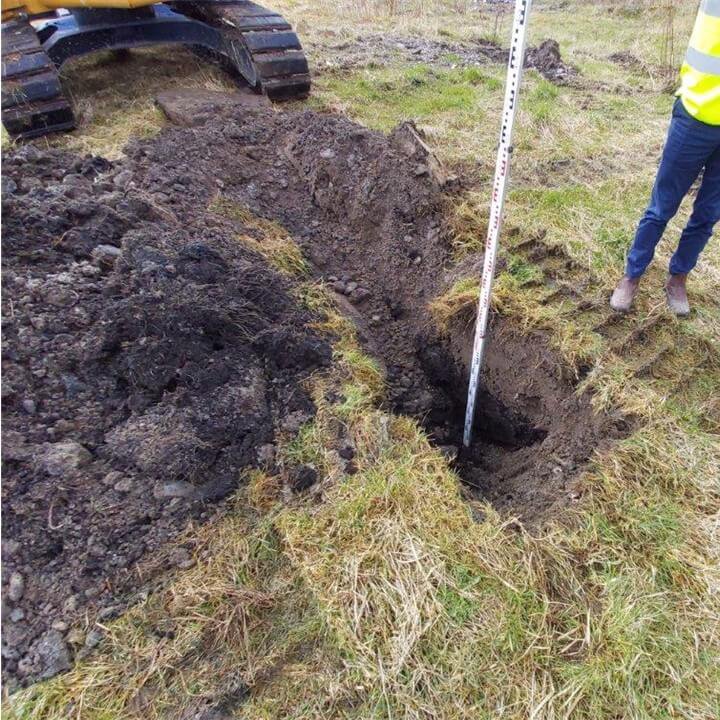
Phase I reads the site; Phase II measures it. Phase I is a desk review of historical, environmental, geological and hydrogeological records plus a walkover of buildings and grounds, ending in a preliminary risk assessment. Phase II follows only where that assessment finds a likely problem, and samples soil and water to confirm its nature and extent.
| Step | Phase | What happens |
|---|---|---|
| 1 | Phase I | Desk review of historical, environmental, geological and hydrogeological records |
| 2 | Phase I | Walkover of buildings and grounds: tanks, staining, activities, waste |
| 3 | Phase I | Preliminary risk assessment: is contamination likely? |
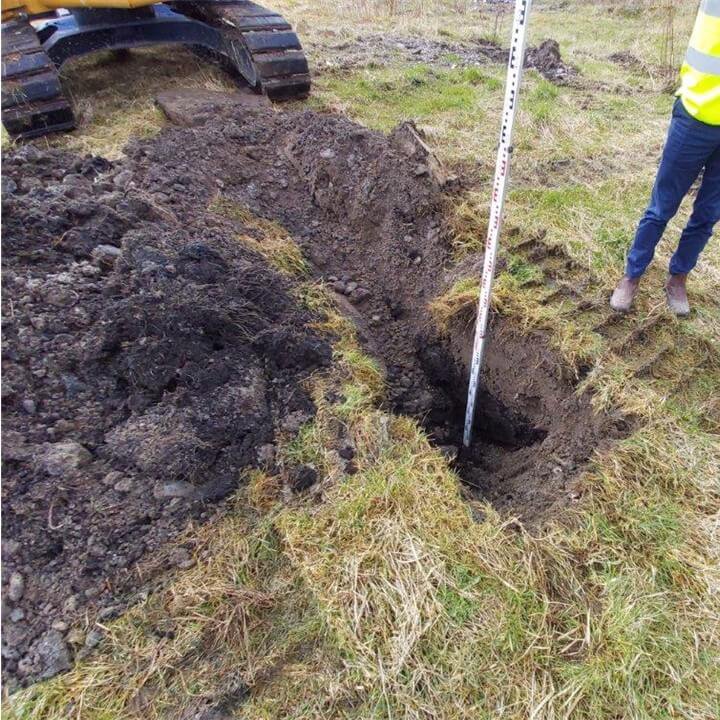
| 4 | Phase II | Boreholes or trial pits, with soil and water samples |
| 5 | Phase II | Laboratory results compared with assessment criteria |
| 6 | Phase II | Conceptual site model, remedial need and likely cost |
| Phase I site assessment | Phase II site assessment | |
|---|---|---|
| Question it answers | Is contamination likely to be present? | What is there, how much, and where is it going? |
| How | Desk review of historical, environmental, geological and hydrogeological records; walkover of buildings and grounds | Boreholes or trial pits, soil samples, groundwater and surface water samples, air monitoring where relevant |
| What the walkover looks for | Fuel or chemical tanks, stained soil, site activities, waste | Not applicable: the fieldwork is targeted at the Phase I findings |
| Lab work | None | Chemical analysis compared with assessment criteria for soil and groundwater |
| You receive | A Phase I report with a preliminary risk assessment and recommendations | A Phase II report with logs, results, a conceptual site model and the remedial need |
| When needed | Every transaction where environmental risk is a concern | Only when Phase I finds a likely problem or recommends testing |
The EPA's guidance for licensed sites stages the same work in three steps: site assessment and risk assessment, then corrective action design, then implementation and verification (EPA, 2013). Most transactions stop after the first.
Will your site need a Phase II?
It depends on what the land has been used for and what sits on it now. Fuel storage, former industry, waste, made ground and a nearby watercourse each raise the chance that a Phase I recommends sampling. The screen below shows which checks your answers usually trigger, as a starting point for the brief.
Site Screen
What the deal is and what you know about the site. Nothing is stored or sent.
Tick what you know about the site to see the checks it usually needs.
How the screen decides
| If you tick | The screen adds | Why |
|---|---|---|
| Any transaction | Phase I desk study and walkover | Every deal with environmental risk starts with the site history. |
| Fuel, oil or chemical storage; fuel station or garage | Phase II likely: soil and groundwater sampling | Tanks and pipework can leak into the soil and groundwater below them. |
| Former industrial or manufacturing use | Phase II likely, plus a licence history check | Process chemicals and old waste can remain after the use ends. |
| Waste on site, old landfill or made ground | Phase II likely, plus waste classification | Buried or imported material needs testing before it can move. |
| River, stream or drain beside the site | Water sampling in any Phase II | A watercourse beside the site is a receptor the sampling must cover. |
| Buildings built before 2000 that will be altered | Pre-refurbishment or pre-demolition asbestos survey | Asbestos must be found before works disturb it. |
| Japanese knotweed or other invasive plants seen | Invasive species survey | Removal needs an NPWS licence under Regulation 49 of S.I. 477 of 2011. |
| Site holds an EPA licence or waste permit | Licence and compliance record review | Licence files, site visit reports and incidents are public on LEAP. |
How this works: common triggers in Irish transactions. A Phase I confirms the real scope; nothing is decided until Verdé has read the site history.
What does a due diligence report tell you?
What could go wrong, how likely it is, and what it would cost to deal with. Verdé reports the environmental risks of the deal in plain terms, with the remedial need and likely costs where testing shows a problem, and a plan for managing what remains through insurance, indemnities or compliance audits.
Phase I report
- Current and historical uses of the site
- Walkover findings, with photographs
- A preliminary risk assessment of likely contamination
- Whether a Phase II is needed, and its scope
Phase II report
- Borehole, trial pit and sampling logs
- Laboratory results against assessment criteria
- A conceptual site model of source, pathway and receptor
- The remedial need and its likely cost
Regulatory review
- Planning permission compliance
- Permits and licences, with their conditions
- Enforcement history on the public record
- Obligations that transfer with the site
Managing what the report finds
Where a risk remains, Verdé sets out an environmental risk management plan covering environmental insurance, indemnities in the contract and ongoing compliance auditing, so the deal can proceed with the risk priced rather than ignored.
What else can hold up a sale besides contamination?
Three things turn up often: invasive plants, asbestos and licence obligations. Japanese knotweed needs a licence to remove, asbestos must be surveyed before works disturb it, and an EPA licence or waste permit carries conditions and records that a buyer inherits. Each is cheaper to find before contracts than after.
Japanese knotweed
Planting, dispersing, or allowing or causing the dispersal of Japanese knotweed is an offence under Regulation 49(2) of S.I. 477 of 2011, and removing it from a site needs an NPWS licence. Ireland's invasive species FAQ says there are no known cases of mortgages refused over knotweed, but it can put buyers off (Invasive Species Ireland, 2024).
Asbestos
Buildings that will be refurbished or demolished need an asbestos survey that finds the presence, location and condition of every asbestos-containing material in the areas the works will disturb. Verdé carries these out as part of due diligence or on their own: see asbestos survey and testing.
Licences, permits and the public record
A licensed site's file is public. The EPA's LEAP portal holds the licence, EPA site visit reports, monitoring returns, incidents and complaints, so a buyer can see the compliance record before taking it on. Verdé reads it as part of the regulatory review; the EPA licence search guide shows how.
What has Verdé found on real sites?
Contamination traced to its source, and the full set of checks a development site needed. One Phase II investigated soil and a nearby stream after a process wash water discharge; a residential site in Terenure, Dublin, needed waste classification, an invasive species survey and an asbestos survey before work began.
Phase II Environmental Site Assessment
2023, Ireland
- Soil and stream sampling after a process wash water discharge to nearby land
- Results compared with assessment criteria and a conceptual site model produced
Environmental services for a residential development site
2023, Terenure, Dublin
- Soil waste classification with WAC testing, and an invasive species survey
- Pre-demolition and refurbishment asbestos survey of the existing buildings
Law Society Gazette guide to environmental due diligence
2017, Ireland
- Written by Verdé's Kevin Cleary for solicitors advising on property
- Explains how polluter pays and lender liability apply in Ireland
Due diligence terms in plain English
Six terms come up in every report. Knowing them makes a Phase I or Phase II report quicker to read and easier to act on, whether you are the buyer, the lender or the solicitor reviewing it for a client.
- Environmental due diligence
- Checking a site or business for environmental liabilities before a transaction.
- Phase I site assessment
- A desk study of records plus a site walkover that judges whether contamination is likely.
- Phase II site assessment
- Intrusive investigation, with samples and lab tests, that measures contamination Phase I suspected.
- Preliminary risk assessment
- The Phase I conclusion on what contamination may exist and who or what it could harm.
- Conceptual site model
- A picture of the contamination source, the pathways it can travel and the receptors it could reach.
- Polluter pays principle
- The rule that whoever causes environmental damage pays to prevent or repair it.
Questions about environmental due diligence
Still have a question? Call 01 201 1260 or email info@verde.ie.
What is environmental due diligence?
It is a check of a site or business for environmental liabilities before a transaction. Verdé runs it in two phases: a Phase I desk study and walkover, and a Phase II with sampling only if Phase I finds a likely problem. The report states the risks and what dealing with them would involve, so they can be priced into the deal.
Who pays to clean up contamination in Ireland?
The starting point is the polluter. The European Communities (Environmental Liability) Regulations 2008, S.I. 547 of 2008, make operators liable for preventing and repairing environmental damage they cause, enforced by the EPA. A new owner or a lender can still be drawn in, which is why buyers check before contracts rather than relying on recovering costs later.
When does a site need a Phase II assessment?
When the Phase I preliminary risk assessment finds contamination is likely, for example from fuel or chemical storage, a former industrial use, buried waste or made ground. Phase II then takes soil, groundwater and surface water samples from boreholes or trial pits and compares the lab results with assessment criteria. Many transactions need only the Phase I.
Can Japanese knotweed stop a property sale in Ireland?
It rarely stops a sale outright. Invasive Species Ireland's 2024 FAQ says there are no known cases of Irish mortgages refused over knotweed, but it can put buyers off. Removing it needs an NPWS licence under Regulation 49 of S.I. 477 of 2011, so a survey before contracts lets the cost and the plan sit in the deal.
Does environmental due diligence include asbestos?
It should whenever buildings on the site will be refurbished or demolished. Verdé's asbestos survey finds the presence, location and condition of asbestos-containing materials in the areas the works will disturb, with recommendations for managing them. It can run alongside the Phase I walkover or as a separate commission.
How do I check a site's EPA licence before buying?
Search the EPA's LEAP portal at leap.epa.ie by licence number, company name or facility name. The site's Licence Dashboard shows the licence, EPA site visit reports, monitoring returns, incidents and complaints, and most records appear about 30 days after they are created. Verdé reviews this record as part of the regulatory check.
What is the difference between environmental and ESG due diligence?
Environmental due diligence looks at one site's physical and regulatory liabilities: contamination, permits and licences. ESG due diligence looks at a company's environmental, social and governance practices more widely, such as emissions, policies and reporting. The first protects the value of the asset; the second informs investors about the business. Verdé covers ESG on its sustainability page.
What does Verdé need to start a due diligence brief?
Four things: the site address or a map, the transaction and its deadline, what you know about past and present uses, and any existing reports, permits or licences. With those, Verdé scopes the Phase I and replies within one working day, flagging early if the site history already points to a Phase II.
Sources and further reading
- Environmental Damage and Environmental LiabilityEnvironmental Protection Agency, checked 24 November 2026. Polluter pays, the EPA as competent authority and the damage covered.
- European Communities (Environmental Liability) Regulations 2008, S.I. 547 of 2008Irish Statute Book, 2008. The Irish regulations that apply the Environmental Liability Directive.
- Management of Contaminated Land and Groundwater at EPA Licensed SitesEnvironmental Protection Agency, 2013. The staged approach from site assessment to verification.
- European Communities (Birds and Natural Habitats) Regulations 2011, S.I. 477 of 2011Irish Statute Book, 2011. Regulation 49: the invasive species offence and licence to remove.
- Japanese Knotweed FAQInvasive Species Ireland, 2024. Knotweed and property sales, mortgages and disposal in Ireland.
- Environmental due diligenceLaw Society of Ireland, Gazette, 2017. Kevin Cleary's article on liability and due diligence for property buyers.
- LEAP: Licence and Enforcement Access PortalEnvironmental Protection Agency, checked 24 November 2026. Where a licensed site's compliance record can be searched.
What happens when you send a due diligence brief
What we ask for
- Site address or a map
- The transaction and its deadline
- Known past and present uses of the site
- Existing reports, permits or licences
Reply
Within one working day, with the Phase I scope and an early flag if the history already points to a Phase II.
If the site has a spill or leak now, call the 24/7 line instead.
Phone 01 201 1260 or email info@verde.ie
Verdé guides on due diligence
- Optimising environmental due diligence in commercial real estate transactionsHow due diligence fits a commercial property deal.
- When investing in property, invest in environmental due diligenceVerdé's case for checking before you buy.
- How to search an EPA licence and read what it requiresReading a licensed site's public record.
Related Verdé services
- Contaminated land in Ireland: find it, assess it, fix itPhase III remediation and validation.
- Site investigation drilling in Ireland, by our own crewsThe boreholes and trial pits behind a Phase II.
- Asbestos Survey & Testing in IrelandSurveys before refurbishment or demolition.
- Is it waste? Classifying and moving soil and C&D waste in IrelandClassification before soil leaves site.
- Which EPA licence does your site need, and how do you get it?Licences a buyer may inherit.
- Environmental consultancy in Ireland, from first survey to sign-offEvery Verdé service by project stage.
Sectors we work in
- Commercial and industrial
- Construction
- Petrochemical
- Public sector
- Insurance
- Private equity and lenders