Dublin remediation services for basement dewatering, oil spills and waste, plus site assessment and solar PV
Verdé’s published Dublin work includes dewatering for basement digs up to 14 metres deep and a 94 kWp solar array 35 metres above the city centre. Its nearest staffed office is its head office in Kilcoole, 31 km from the city centre in a straight line.
Last updated by Verdé Environmental Group
Straight-line distances from Verdé’s Kilcoole office. Larger dots are larger towns.
- published Dublin dewatering projects, 2024 and 2025
- 5
- the deepest of them, a treble-basement dig in Ballsbridge
- 14 m
- spill line: 0818 714 002
- 24/7
Key takeaways
- Verdé has published five Dublin dewatering case studies, including a 14-metre treble-basement dig in Ballsbridge.
- Dublin city centre is 31 km from Verdé’s Kilcoole head office in a straight line; Dún Laoghaire is 22 km.
- 66% of Dublin households heat with natural gas and 9% with oil, which is still 45,841 homes (Census 2022).
- Dublin has four councils. Which one to tell about pollution depends on the address.
Verdé Environmental Group is an Irish remediation contractor and environmental consultancy that works across Dublin city and county from its head office in Kilcoole, County Wicklow. In Dublin its published work is mostly on building sites: dewatering deep basement excavations under discharge licence, classifying soil and demolition waste, and fitting solar PV, alongside 24/7 oil spill clean-up for homes and businesses.
This page is about Verdé’s work in Dublin city and county. Verdé is not a Dublin firm: its staffed offices are in Kilcoole, Castlebar and Cork, and Galway is by appointment only. The construction dewatering page explains the service itself, and the projects page lists every case study.
What remediation and environmental work does Verdé do in Dublin?
In Dublin, Verdé’s remediation and environmental services cover dewatering basement excavations, oil spill clean-up, soil and demolition waste classification, site assessments and monitoring, asbestos surveys and solar PV. Its work here is run from its Kilcoole head office, and it has eight published Dublin case studies from 2023 to 2025.
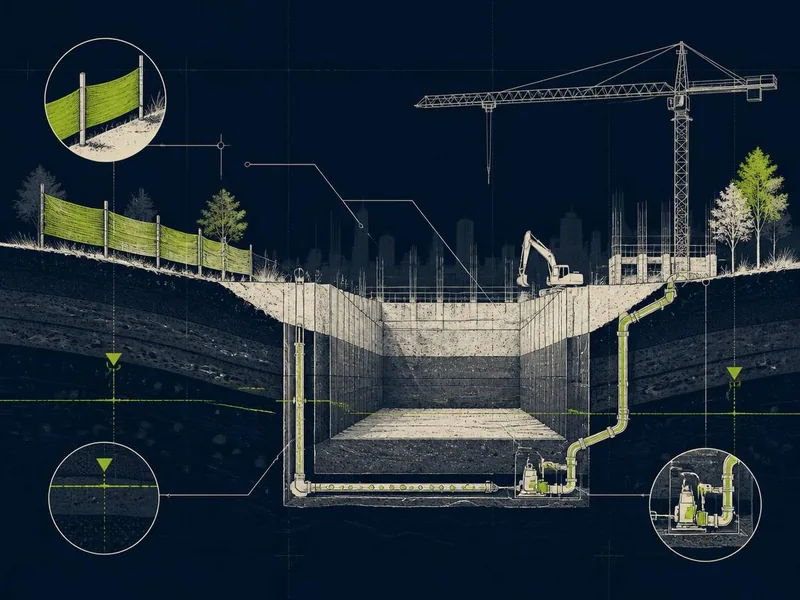
Construction dewatering in Dublin
Verdé designs and runs dewatering for basement digs, applies for the discharge licence and monitors the water leaving the site. On one Dublin 8 site it discharged about 3,000 m³ a day to the River Camac under licence for 11 months.
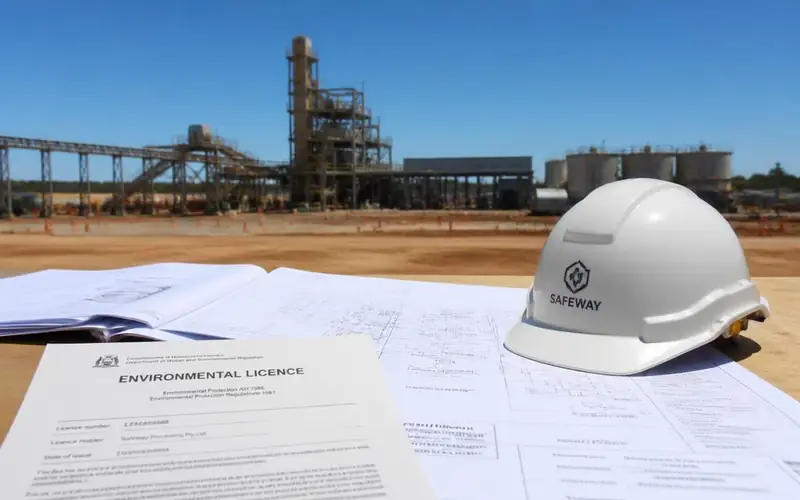
Environmental consultancy in Dublin
Site assessments, noise and air monitoring, and the environmental reports a Dublin planning application or licence asks for. For a housing site in Terenure, Verdé produced the demolition waste plan, the soil classification and the invasive species and asbestos surveys.
Asbestos surveys and testing in Dublin
366,521 Dublin households, 71% of the county, live in homes built in 2000 or earlier, against 65% nationally. The HSA flags pre-2000 buildings for asbestos checks before refurbishment or demolition, and Verdé carries out those surveys and the air testing.
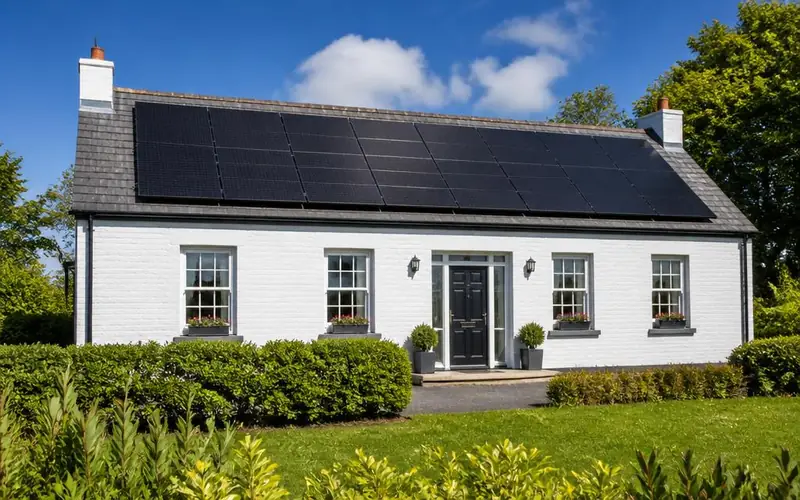
Solar PV in Dublin
In 2025 Verdé fitted a 94 kWp solar PV system across two roofs 35 metres up on a city centre building, lifted into place by crane. In 2024 it fitted an 8.8 kWp system with battery storage on a renovated Dublin home.
Oil spill clean-up in Dublin
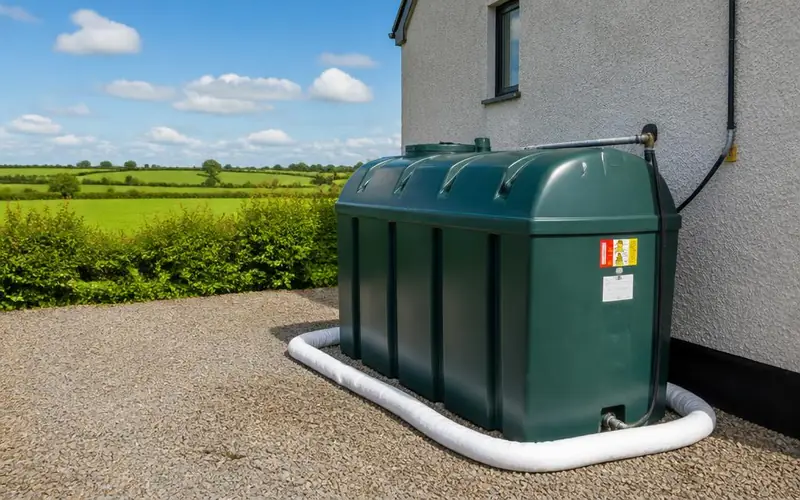
Only 9% of Dublin households heat with oil, but that is 45,841 homes, 15,402 of them in Fingal and 12,354 in South Dublin. A leak at any of them gets the same answer: ring 0818 714 002 at any hour.
Waste management in Dublin
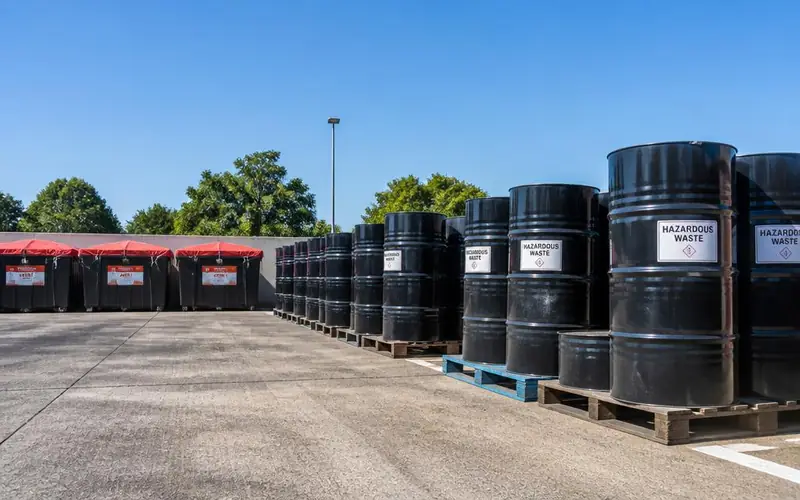
Verdé samples and classifies soil and demolition waste before it leaves a Dublin site, and writes the waste management plan for the project, as it did for the housing site in Terenure.
Four councils, one county
Dublin is run by four councils: Dublin City, Dún Laoghaire-Rathdown, Fingal and South Dublin. A discharge licence, a waste query or a pollution report goes to the one that covers the address, and the table of areas further down this page says which that is.
No Dublin office
Verdé does not have an office in Dublin. Kilcoole, its head office and laboratory, is the office it lists for the county: 22 km from Dún Laoghaire and 31 km from the city centre in a straight line.
How does Dublin heat its homes, and how old are they?
66% of Dublin’s 518,490 households heat with natural gas, 17% with electricity and 9% with oil (Census 2022). 71% live in homes built in 2000 or earlier, and fewer than 2 in 100 have a septic tank.
| Measure | Households in Dublin | Share in Dublin | Share in Ireland |
|---|---|---|---|
| Oil central heating | 45,841 | 9% | 39% |
| Natural gas central heating | 341,610 | 66% | 33% |
| Electric central heating | 85,791 | 17% | 12% |
| Coal, peat or wood central heating | 3,234 | 1% | 9% |
| Other fuel, no central heating or not stated | 42,014 | 8% | 8% |
| Water from a private source that is not a group scheme | 1,901 | 0% | 10% |
| Own septic tank | 8,883 | 2% | 25% |
| Home built in 2000 or earlier | 366,521 | 71% | 65% |
| All households | 518,490 | 100% | 100% |
Gas first
Dublin heats mainly with gas: 66% of households against 33% nationally. The 45,841 households on oil are spread across all four council areas, with the most in Fingal (15,402) and South Dublin (12,354).
An older housing stock
366,521 Dublin households live in homes built in 2000 or earlier. The HSA highlights pre-2000 buildings as a particular concern for asbestos during refurbishment and demolition (HSA), which is why a survey comes before the strip-out.
Mains water and public sewers
1,901 Dublin households have a private water source and 8,883 a septic tank, 2% of the county against 25% nationally. Almost every home is on the public main and the public sewer.
Heat with oil
9% Dublin
39% Ireland
Water from a private source
0% Dublin
10% Ireland
Own septic tank
2% Dublin
25% Ireland
Home built in 2000 or earlier
71% Dublin
65% Ireland
How far is Verdé from your part of Dublin?
Verdé’s nearest staffed office to Dublin is its head office in Kilcoole, County Wicklow. In a straight line it is 22 km from Dún Laoghaire, 29 km from Tallaght, 31 km from the city centre, 41 km from Swords and 57 km from Balbriggan, at the north end of the county.
- Verdé, Kilcoole: 0 km
Dún Laoghaire22 km
Dundrum24 km
Tallaght29 km
Dublin city centre31 km
Clondalkin33 km
Blanchardstown38 km
Lucan39 km
Malahide40 km
Swords41 km
Rush47 km
Skerries54 km
Balbriggan57 km
Dublin distance and council check
Pick your area and what you need. You get the distance from Kilcoole, your council and the number to ring.
Pick your town and what you need. The answer gives the distance and who to ring.
Every town and distance as a table
| Town | Population, Census 2022 | Distance from Kilcoole | Direction from the office | Council |
|---|---|---|---|---|
| Dún Laoghaire | Not listed separately | 22 km | north | Dún Laoghaire-Rathdown County Council |
| Dundrum | Not listed separately | 24 km | north-west | Dún Laoghaire-Rathdown County Council |
| Tallaght | Not listed separately | 29 km | north-west | South Dublin County Council |
| Dublin city centre | Dublin city and suburbs: 1,263,219 | 31 km | north-west | Dublin City Council |
| Clondalkin | Not listed separately | 33 km | north-west | South Dublin County Council |
| Blanchardstown | Not listed separately | 38 km | north-west | Fingal County Council |
| Lucan | Not listed separately | 39 km | north-west | South Dublin County Council |
| Malahide | 18,608 | 40 km | north | Fingal County Council |
| Swords | 40,776 | 41 km | north | Fingal County Council |
| Rush | 10,875 | 47 km | north | Fingal County Council |
| Skerries | 10,743 | 54 km | north | Fingal County Council |
| Balbriggan | 24,322 | 57 km | north | Fingal County Council |
Each distance is a straight line from the Kilcoole office to the centre of the area, rounded to the nearest kilometre; positions are from OpenStreetMap. The CSO counts Tallaght, Lucan, Clondalkin, Blanchardstown, Dundrum and Dún Laoghaire as part of Dublin city and suburbs, so they have no population of their own here. No arrival time is promised.
Which council do you tell about a spill in Dublin?
Ring Verdé on 0818 714 002 for the clean-up, and tell the council that covers the address: Dublin City on 01 222 2222, Dún Laoghaire-Rathdown on 01 205 4700, Fingal on 01 890 6799 or South Dublin on 01 414 9000. The EPA’s complaint guide points to the local authority first.
If oil is leaking now at a Dublin home, site or business
Then ring Verdé on 0818 714 002; the response comes from Kilcoole.
If it has reached a drain or someone else’s land
Then tell the council for the address: Dublin City, Dún Laoghaire-Rathdown, Fingal or South Dublin.
If a river, stream or lake is hit, or fish are in distress
Then also ring Inland Fisheries Ireland on 0818 34 74 24.
If it is night-time, or you do not know which council covers the place
Then the national line, 1800 365 123, is open 24 hours.
| Who | What they do | How to reach them |
|---|---|---|
| Verdé 24/7 spill line | Clean-up and the investigation after it, at any hour. | 0818 714 002 · Any hour, every day |
| Dublin City Council | Takes pollution reports for the addresses in its area. | 01 222 2222 · citizenhub@dublincity.ie |
| Dún Laoghaire-Rathdown County Council | Takes pollution reports for the addresses in its area. | 01 205 4700 · info@dlrcoco.ie · Out of hours 01 677 8844 |
| Fingal County Council | Takes pollution reports for the addresses in its area. | 01 890 6799 · environment@fingalcoco.ie · Out of hours 01 890 5000 |
| South Dublin County Council | Takes pollution reports for the addresses in its area. | 01 414 9000 · info@sdublincoco.ie |
| National Environmental Complaints Line | Pollution reports, day or night (EPA complaint guide). | 1800 365 123 · Open 24 hours, 7 days a week |
| Inland Fisheries Ireland | Rivers, streams, lakes and fish in distress. | 0818 34 74 24 · Confidential line, 24 hours |
What to do in Dublin, by situation
If oil is leaking now at a Dublin home, site or business
then ring Verdé on 0818 714 002; the response comes from Kilcoole.
If it has reached a drain or someone else’s land
then tell the council for the address: Dublin City, Dún Laoghaire-Rathdown, Fingal or South Dublin.
If it is night-time, or you do not know which council covers the place
then the national line, 1800 365 123, is open 24 hours.
If a river, stream or lake is hit, or fish are in distress
then also ring Inland Fisheries Ireland on 0818 34 74 24.
If the site holds an EPA licence
then report it under the licence; the EPA deals with licensed sites itself.
If nothing is leaking and the work is planned
then use the contact page; Verdé replies within one working day.
Contact details are as printed in the EPA’s guide, How to Make an Environmental Complaint (November 2025). The guide notes that its See It? Say It! reporting app works with every council except Dublin City Council, which uses its own Citizen Hub. For first steps at the tank, read the first hour of a heating oil leak.
What has Verdé done in Dublin?
Verdé has published eight Dublin case studies: five on construction dewatering, two on solar PV and one on waste and surveys for a housing site. Six are below, with figures taken from each case study.
2024
Deep-well dewatering for a 10 m dig
Dublin 8
- 7,000 m² site
- About 3,000 m³ a day discharged under licence to the River Camac for 11 months
2024
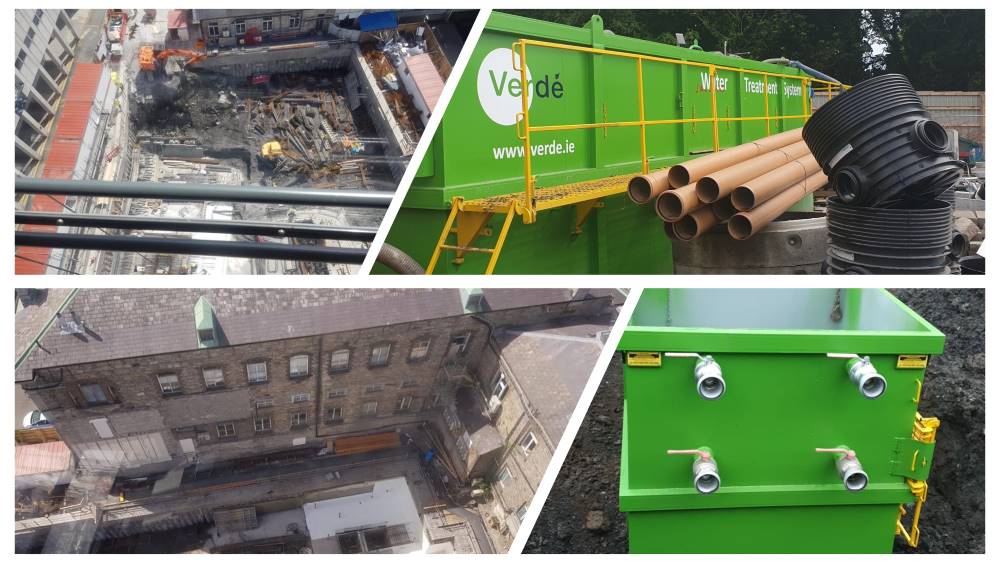
Treble-basement dewatering in Ballsbridge
Ballsbridge, Dublin 4
- 14 m dig in clay and bedrock on a 10,000 m² site
- pH control, and over 200 tonnes of sludge removed
2024
Double-basement dewatering at Trinity College Dublin
Dublin 2
- 8 m dig on a 2,200 m² site
- Discharge licence application and bespoke dewatering
2025
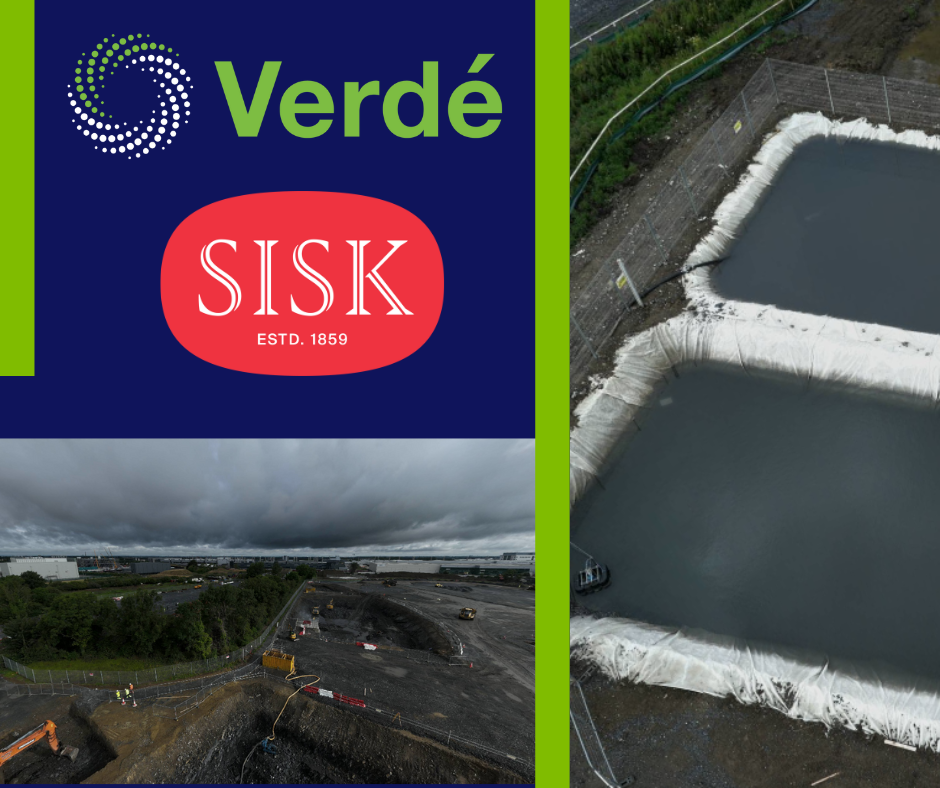
Data centre dewatering at Profile Park
Profile Park, Dublin
- First two phases of a 22-acre, 52 MW campus
- From licensing to compliance monitoring
2025
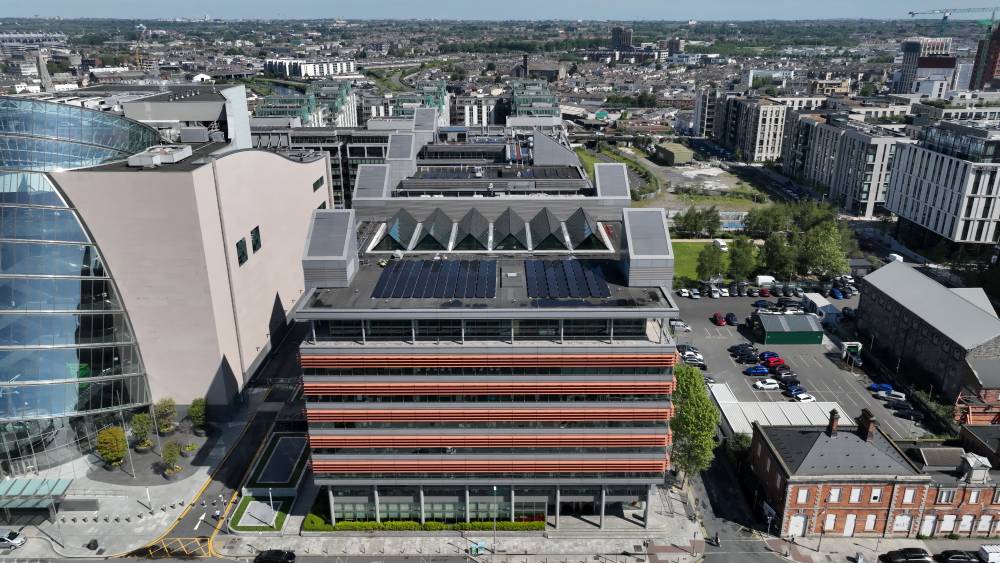
94 kWp solar PV on a city centre roof
Dublin city centre
- Two roofs 35 m up, reached by a scheduled crane lift
- G10 switch and linear heat detection
2023
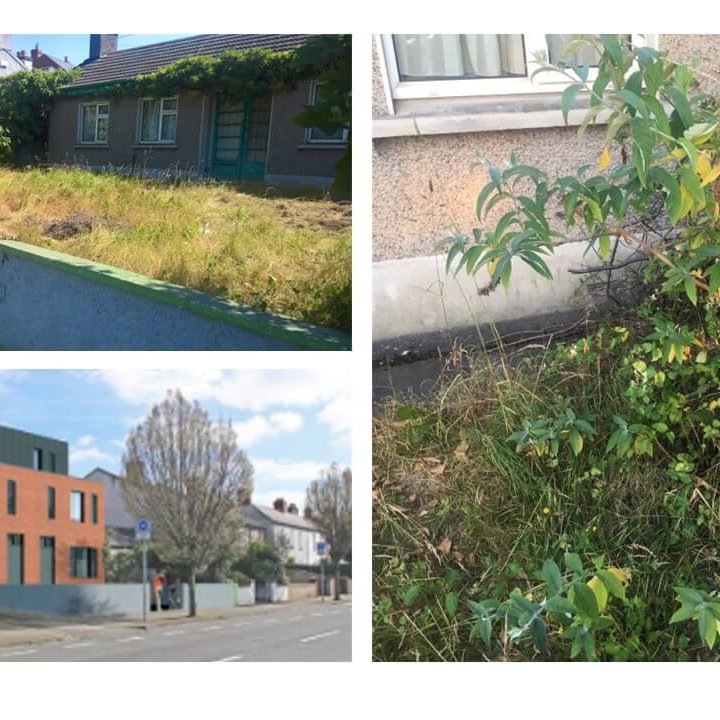
Waste plan and surveys for a housing site
Terenure, Dublin
- Demolition waste plan and soil waste classification
- Invasive species and asbestos surveys
Is this right for you?
This is a fit if
- A basement or deep excavation that needs dewatering, like Verdé’s jobs at Trinity College and in Ballsbridge.
- A discharge licence for pumped groundwater, from the council that covers the site.
- A heating oil leak at one of the 45,841 Dublin homes that still heat with oil, most of them in Fingal and South Dublin.
- Soil to classify, or a waste plan and surveys for a housing site.
- Solar PV on a city roof, like Verdé’s 94 kWp system in the city centre.
This is not a fit if
- Asbestos removal: Verdé surveys and tests, and a specialist contractor removes it.
- A boiler service or a fuel delivery, which is for a heating engineer or a fuel supplier.
- A fire or an injury: ring 999 or 112 first.
If your Dublin project is none of these, send two lines through the contact page or ring Kilcoole on 01 201 1260. Verdé will tell you plainly whether it is work it does.
What should a Dublin client weigh up?
For a Dublin project the practical questions are whether the firm has done the same work in the city before, who handles the discharge licence, and how far away its people are. Verdé’s answers are below.
| Criterion | Verdé | What it means for you |
|---|---|---|
| Dublin track record | Eight published Dublin case studies, 2023 to 2025 | Five dewatering jobs, two solar PV installations and one waste and survey package. |
| Nearest staffed office | Kilcoole head office and laboratory | In Kilcoole, Co. Wicklow: 22 km from Dún Laoghaire and 31 km from the city centre in a straight line. |
| Councils | Four: Dublin City, Dún Laoghaire-Rathdown, Fingal and South Dublin | The table of towns says which one covers each. |
| Spill line | 0818 714 002, at any hour | Answered day and night, every day of the year. |
| Track record | Since 2002, with more than 6,000 oil spill projects | ISO 9001, ISO 14001 and ISO 45001 certified. |
| Price | Quoted once the site and the scope are known | No fixed price is published. |
Remediation services in Dublin: questions people ask
Still have a question? Call 01 201 1260 or email info@verde.ie.
Does Verdé have an office in Dublin?
No. Verdé’s nearest staffed office to Dublin is its head office and laboratory in Kilcoole, County Wicklow, 22 km from Dún Laoghaire and 31 km from the city centre in a straight line. Its other staffed offices are in Castlebar and Cork, and Galway is by appointment only.
What work has Verdé done in Dublin?
Eight published case studies between 2023 and 2025. Five are construction dewatering jobs, including a 14-metre treble-basement dig in Ballsbridge and a 10-metre dig in Dublin 8 that discharged about 3,000 m³ a day under licence. Two are solar PV installations, of 94 kWp and 8.8 kWp, and one is a waste plan and survey package in Terenure.
Which council do I report pollution to in Dublin?
The one that covers the address. Dublin City Council is on 01 222 2222, Dún Laoghaire-Rathdown on 01 205 4700, Fingal on 01 890 6799 and South Dublin on 01 414 9000. If you are not sure which applies, the National Environmental Complaints Line on 1800 365 123 is open 24 hours a day, 7 days a week.
How many Dublin homes heat with oil?
45,841 households, 9% of the 518,490 in Dublin city and county, on census night in April 2022. Natural gas heats 66% and electricity 17%. The oil homes are in all four council areas, with 15,402 in Fingal and 12,354 in South Dublin.
Who applies for a dewatering discharge licence in Dublin?
Verdé does, as part of the job. A discharge to a river or stream needs a Section 4 licence and a discharge to a sewer a Section 16 licence (Dublin City Council). At Trinity College Dublin, Verdé made the licence application for an 8-metre double-basement dig, and in Dublin 8 it discharged to the River Camac under licence for 11 months.
Does Verdé do asbestos surveys in Dublin?
Yes: management surveys, refurbishment and demolition surveys and air testing. 366,521 Dublin households, 71% of the county, live in homes built in 2000 or earlier, the age the HSA flags for asbestos checks. Verdé surveyed for asbestos on a housing site in Terenure. It does not remove asbestos; ask first about a private house.
Does Verdé install solar panels in Dublin?
Yes, on homes and on commercial roofs. In 2025 it fitted a 94 kWp system across two roofs 35 metres above the city centre, lifted by crane, and in 2024 an 8.8 kWp system with battery storage on the flat roof of a renovated Dublin home. The solar PV page explains the service.
How quickly can Verdé get to a spill in Dublin?
No fixed arrival time is published. Ring 0818 714 002 at any hour and the duty engineer confirms the response on the call. Verdé’s Kilcoole office is 29 km from Tallaght and 41 km from Swords in a straight line, and the drive is longer than that.
Terms used on this page
- Dewatering
- Pumping groundwater out of an excavation so a basement or foundation can be built in the dry.
- Local authority
- The council for an address. Dublin has four: Dublin City, Dún Laoghaire-Rathdown, Fingal and South Dublin.
- Straight-line distance
- Measured on a map, ignoring roads: Kilcoole to Dún Laoghaire is 22 km.
Sources and further reading
- Census 2022 Small Area Population StatisticsCentral Statistics Office, 2023. Heating fuel for each of Dublin’s 518,490 households, plus water, sewerage, year built and town sizes.
- How to Make an Environmental ComplaintEnvironmental Protection Agency, 2025. The four Dublin councils’ contact details and the national 24-hour line.
- Discharge licencesDublin City Council, checked 3 November 2026. Section 4 licences for discharges to waters and Section 16 licences for discharges to sewer.
- Contact usInland Fisheries Ireland, checked 11 November 2026. The 24-hour line for pollution in rivers and lakes.
- Safety alert: asbestos-containing materials on demolition and refurbishment sitesHealth and Safety Authority, 2022. Why buildings from before 2000 need an asbestos check before work starts.
- OpenStreetMapOpenStreetMap contributors, checked 11 November 2026. Town positions from Balbriggan to Dún Laoghaire, for the distances from Kilcoole.
- Contact Verdé: Kilcoole, Castlebar and CorkVerdé Environmental Group, checked 11 November 2026. The Kilcoole office that covers Dublin.
Tell us what is happening in Dublin
What we ask for
- The address or Eircode, and the council area if you know it.
- What it is: a leak, a survey, an assessment, dewatering or solar.
- For a leak: what leaked, roughly how much, and whether it reached a drain, a stream or a well.
- For planned work: the date you need it by, and any planning or licence reference.
Reply
Within one working day.
For a spill or pollution incident, phone 0818 714 002 at any hour.
Office 01 201 1260 or info@verde.ie
More counties Verdé covers
- County WicklowHome of Verdé’s head office and laboratory in Kilcoole.
- County KildareDewatering in Naas and oil spill response across the county.
- County CorkVerdé’s Cork office at Airport East covers city and county.
- County MayoVerdé’s Castlebar office, in a county where six homes in ten heat with oil.
- Remediation services by countyThe three offices and the counties each one looks after.
Related pages
- Construction dewateringDischarge routes, licences, treatment and methods.
- Environmental consultancyAssessments, audits and reports, by project stage.
- Waste managementClassifying soil and waste, and the routes off site.
- Asbestos surveys and testingWhich survey applies before refurbishment or demolition.
- Solar PVSolar for homes, businesses and larger sites.
- Oil spill clean-upThe 24/7 line and the four stages of a clean-up.