
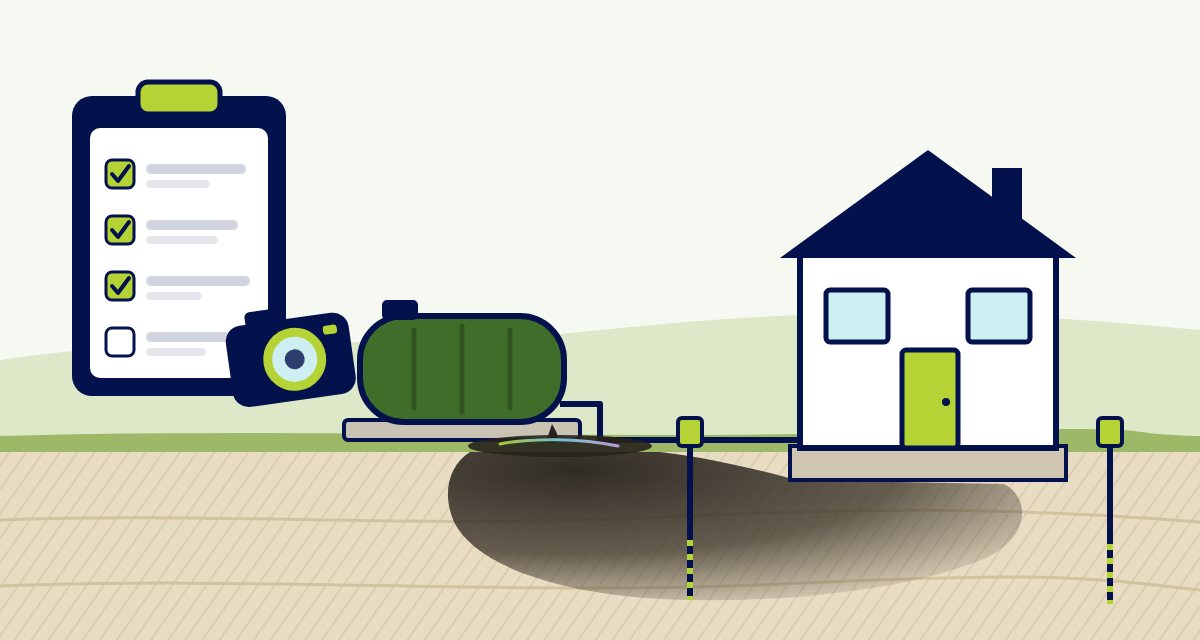
A heating oil leak at home can turn into a large insurance claim, because the clean-up can mean digging out soil, treating a septic system or breaking out a floor. The claim and the clean-up run side by side. This guide sets out who does what, the seven steps from the leak to payment, and the rights the Consumer Insurance Contracts Act 2019 gives you along the way. If oil is escaping now, call 0818 714 002 first.
Is a heating oil leak covered by home insurance?
Often, but it depends on your policy. Clare County Council's advice on heating oil tanks says many homeowners have their oil tank and its contents covered under their home insurance (Clare County Council). Insurers call the event escape of oil. The CCPC points out that cover and exclusions vary between policies, so it is worth reading your own wording before you need it (CCPC). Four things to look for:
- Escape of oil. Whether the policy names it, and any limit on what it pays.
- Buildings and contents. Buildings cover is for the structure and permanent fittings, including garages, outbuildings and garden walls. Contents cover is for the things you can move, including some flooring.
- The excess. What you pay towards a claim before the insurer pays the rest. The CCPC says standard excesses are usually €100 to €500.
- Exclusions. The CCPC lists wear and tear and how long a home can be left unoccupied among the common exclusions or restrictions. For oil, both are worth checking: a tank that failed with age, or a leak that ran while the house stood empty.
The claim, step by step
Make it safe and call for help
Close the tank valve only if you can reach it safely, keep oil out of drains, and call 0818 714 002 at any hour. If oil reaches a stream, also call Inland Fisheries Ireland on 0818 34 74 24; if it may reach the public water supply or a sewer, call Uisce Éireann on 1800 278 278. The first-hour guide covers this step in full.
Tell your insurer or broker
The CCPC's advice is to call as soon as you discover the problem, and many insurers have a free emergency helpline. The 2019 Act asks you to notify the insurer within a reasonable time, or as your policy requires.
Record the evidence
Photograph the tank, the pooling, the spread and any staining before anything is moved. Keep receipts for any emergency work, and keep anything else that supports the claim.
The loss adjuster assesses the claim
A loss adjuster works for the insurance company and investigates and settles the claim on its behalf. The 2019 Act requires you to cooperate with the insurer's investigation, answering its reasonable questions honestly and carefully.
The investigation shows how far the oil went
Boreholes and sampling show whether the oil stayed in the garden soil or reached the house, a septic tank, a neighbour's land or groundwater. Each one changes the clean-up, and the evidence the insurer receives. If oil may have crossed the boundary, tell the insurer early: the investigation then covers both properties.
Clean-up and validation
Contaminated material goes to licensed facilities, and soil, water and, where oil reached the building, indoor air are sampled to show the clean-up met its targets. A written report records the work and the results, so the insurer and you have the same record.
The decision and payment
When the claim is settled, the insurer must tell you the amount and the reasons, and pay within a reasonable time. If part of the claim can be valued before the rest, that part must be paid within a reasonable time too.
Who does what in an oil spill claim?
The people in a heating oil claim, and what each one does.
You
What they do: Tell the insurer, cooperate with its investigation, take reasonable steps to prevent further damage, and keep the evidence.
Your insurer
What they do: Handles the claim promptly and fairly, gives you a chance to submit evidence, decides the claim and pays what is due.
Loss adjuster
What they do: Works for the insurance company. Investigates the claim and settles it on the insurer's behalf.
Loss assessor, if you choose one
What they do: Works for you and negotiates with the insurer. The CCPC says an assessor's fees are not covered by your policy (CCPC).
Oil spill specialist
What they do: Contains the oil, investigates how far it went, cleans up, and validates the result with sampling and a written report.
| Who | What they do |
|---|---|
| You | Tell the insurer, cooperate with its investigation, take reasonable steps to prevent further damage, and keep the evidence. |
| Your insurer | Handles the claim promptly and fairly, gives you a chance to submit evidence, decides the claim and pays what is due. |
| Loss adjuster | Works for the insurance company. Investigates the claim and settles it on the insurer's behalf. |
| Loss assessor, if you choose one | Works for you and negotiates with the insurer. The CCPC says an assessor's fees are not covered by your policy (CCPC). |
| Oil spill specialist | Contains the oil, investigates how far it went, cleans up, and validates the result with sampling and a written report. |
Your rights while the claim is open
Section 16 of the Consumer Insurance Contracts Act 2019 sets out duties on both sides of a claim (section 16). For you, the duty is to cooperate with the insurer's investigation and to notify the claim within a reasonable time. For the insurer:
- Late notice. If you report late but the delay has not prejudiced the insurer, it cannot refuse the claim on that ground alone.
- Fair handling. The claim must be handled promptly and fairly, and you must get a chance to submit relevant evidence.
- Reasons. When the claim is settled, the insurer must tell you the amount and the reasons for it.
- Payment. What is due must be paid within a reasonable time. If only part of the claim can be valued in that time, that part must be paid.
The CCPC adds that, under the Consumer Protection Code, insurers must keep you informed of new developments within 10 working days and give you their decision within five working days of making it. If the claim is not settled in your favour, they must explain why in writing and tell you how to appeal. There is no set time for settlement: it depends on the type of claim, and some need expert opinions (CCPC).
What makes an oil claim bigger?
How much oil escaped, how long it ran before it was stopped, and what it reached. Oil that stays in garden soil is a smaller job than oil under a floor slab, in a septic system or in groundwater, and each step outward adds investigation and work (escape of oil claims).
Two homes from Verdé's 2024 case files show the range. In Co. Westmeath, over 600 litres of kerosene from a storage tank reached neighbouring land, the septic tank and the ground beneath the house, and 180 tonnes of contaminated material were removed (the Westmeath case). In Co. Longford, a leak at an underground oil line fitting spread beneath about half the building; the concrete floor was broken out, and foundation walls were propped, removed and replaced (the Longford case).
That is why the first hour matters to the claim as well as the garden: a fast, controlled first response limits how far the oil spreads, which keeps the work, and the claim, smaller. Where oil reaches a well or groundwater, a hydrogeological assessment shows where it is moving.
While the claim is open
Do
- Photograph the tank, the oil and the staining before anything is moved
- Tell your insurer or broker as soon as you find the leak
- Keep receipts for any emergency work, and check those costs are covered
- Ask for a written update if the claim seems delayed
- Keep the sampling results, the validation report and the waste records
Do not
- Hose the oil away or wash it with detergent
- Dig up or move contaminated soil yourself: it is a regulated waste
- Run the boiler to use up the oil if the leak is on the tank or feed line
- Throw out damaged items before the insurer has seen them or agreed
If the claim is refused or delayed
Ask for the reasons in writing, check them against your policy, and ask whether more information or evidence could change the decision. If you still disagree, use the insurer's complaints procedure (CCPC).
A provider regulated by the Central Bank must acknowledge a complaint it cannot resolve within 5 business days, update you every 20 business days and make a decision within 40 business days (CCPC). If you are not happy with its final response, or 40 working days pass without one, you can go to the Financial Services and Pensions Ombudsman. Its service is free, and you send a copy of the final response letter with your complaint (FSPO).